AI Built for the
Healthcare Enterprise
In healthcare, AI needs trusted clinical information, reliable operational data, and clear accountability.
Medinous brings these foundations together to prepare the patient record, answer hospital questions, and keep follow-up moving after the visit.
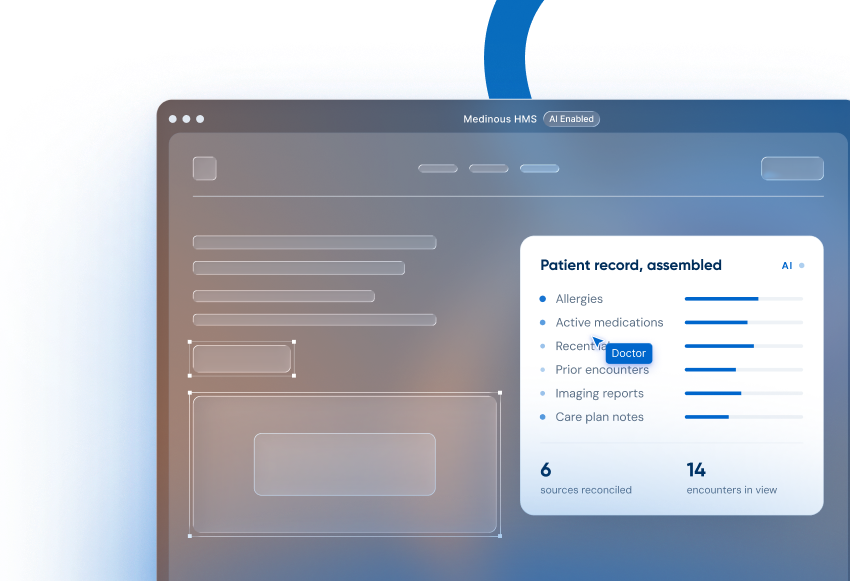
From Connected Hospital Data to Informed Action
Medinous healthcare AI brings clinical and operational data into context, surfaces decision-relevant information within healthcare workflows, and supports clinicians and authorized teams in taking the next action.

Connect & Contextualize
Relevant clinical and operational data is brought together from connected hospital systems and organized around the patient, question, or workflow at hand.

Analyze & Surface
AI summarizes information, answers questions, identifies relevant patterns, and flags exceptions or follow-up needs for attention.
Review & Act
Clinicians, hospital leaders, and authorized teams review AI-assisted insights, apply professional judgment, and take the appropriate clinical or operational action.
AI Capabilities for Critical
Healthcare Priorities
Enterprise healthcare AI for clinical intelligence, operational performance, and patient engagement.
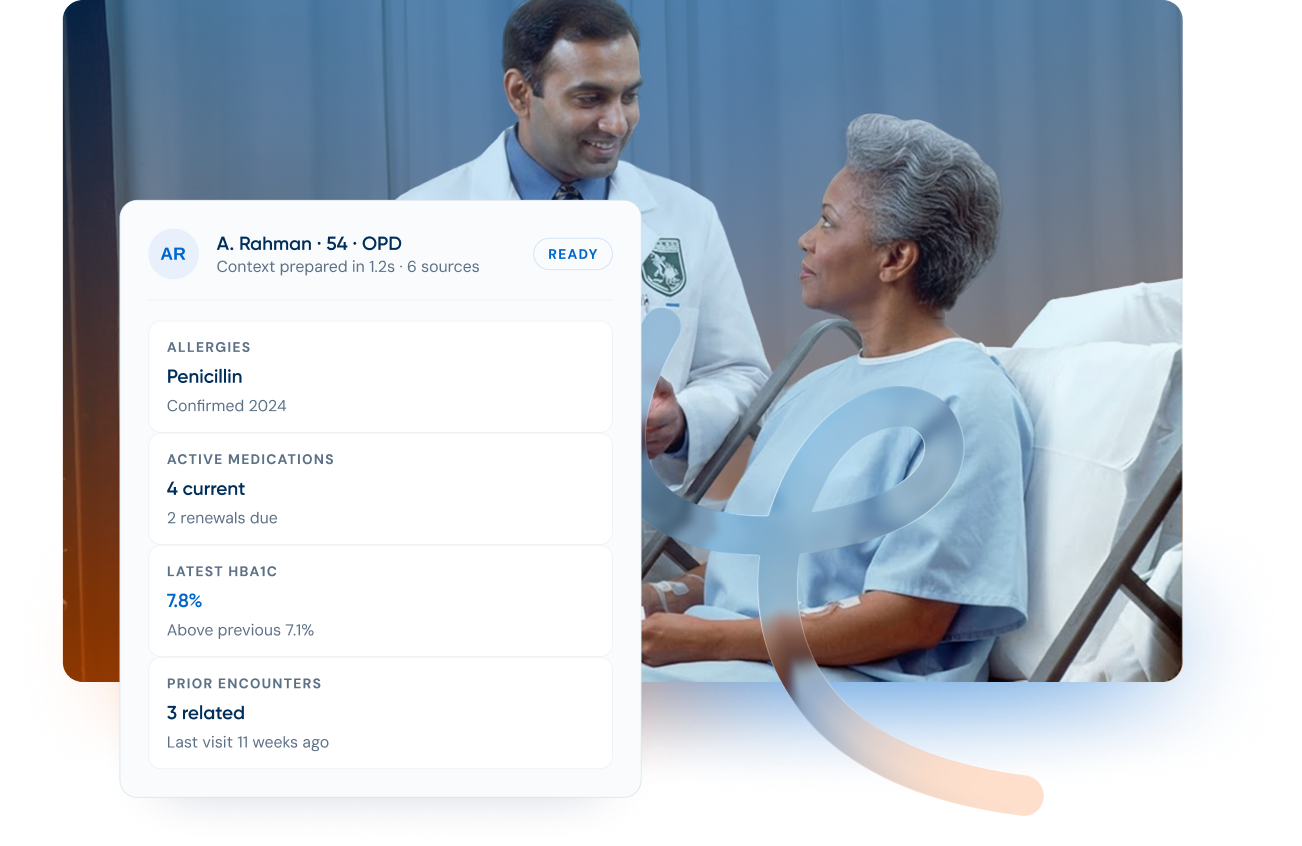
Patient Context, Ready at the Point of Care
Gives clinicians faster access to relevant patient history, medications, investigations, and prior encounters within the clinical workflow.
- Brings longitudinal patient information into a unified clinical view.
- Enables natural-language access to relevant clinical data and patient history.
- Embeds AI-assisted patient context directly into existing clinical workflows at the point of care.
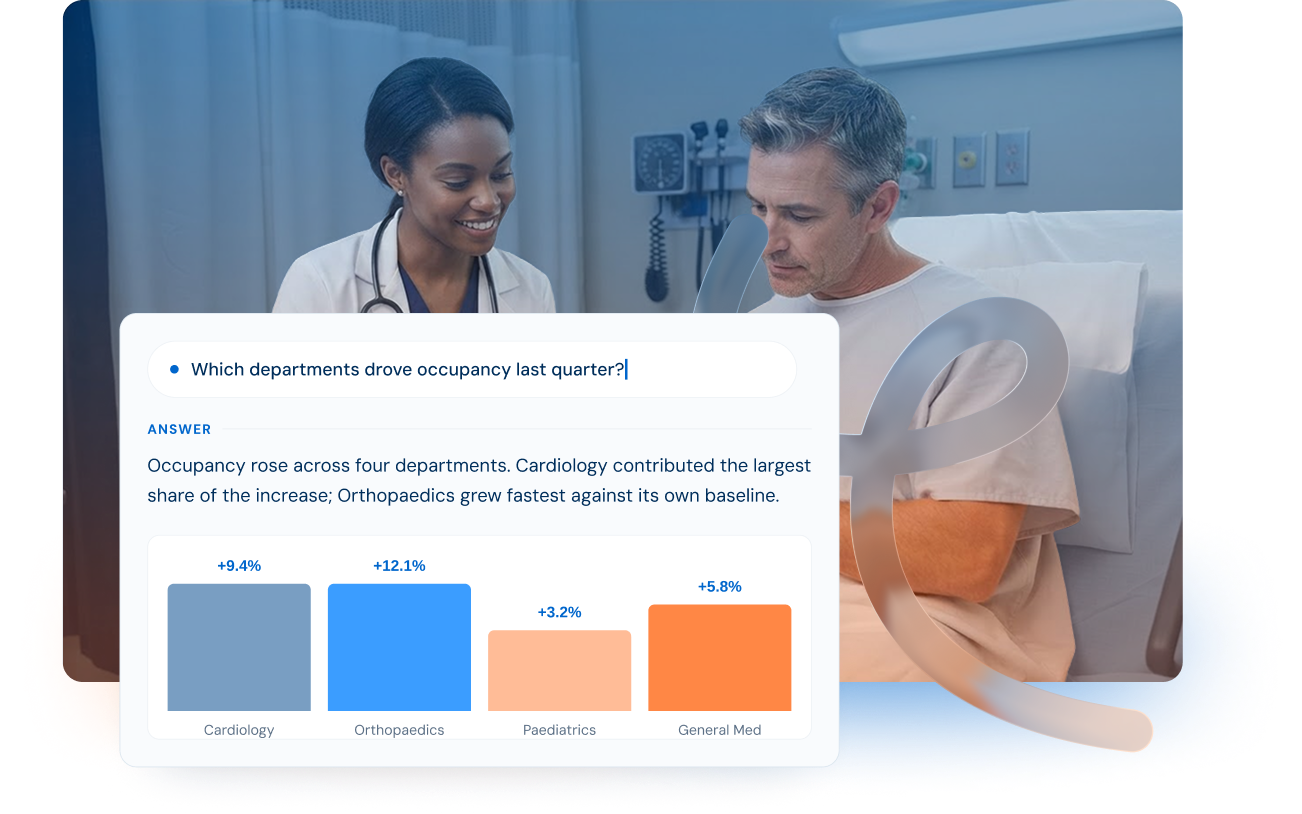
Hospital Performance Insights, On Demand
Gives hospital leaders direct access to operational, clinical, financial, and capacity insights across the enterprise.
- Brings bed occupancy, revenue, utilization, and clinical KPIs into a unified hospital performance dashboard.
- Surfaces trends, exceptions, and performance gaps that require management attention.
- Delivers role-based healthcare analytics for department heads, operational leaders, and executive teams.
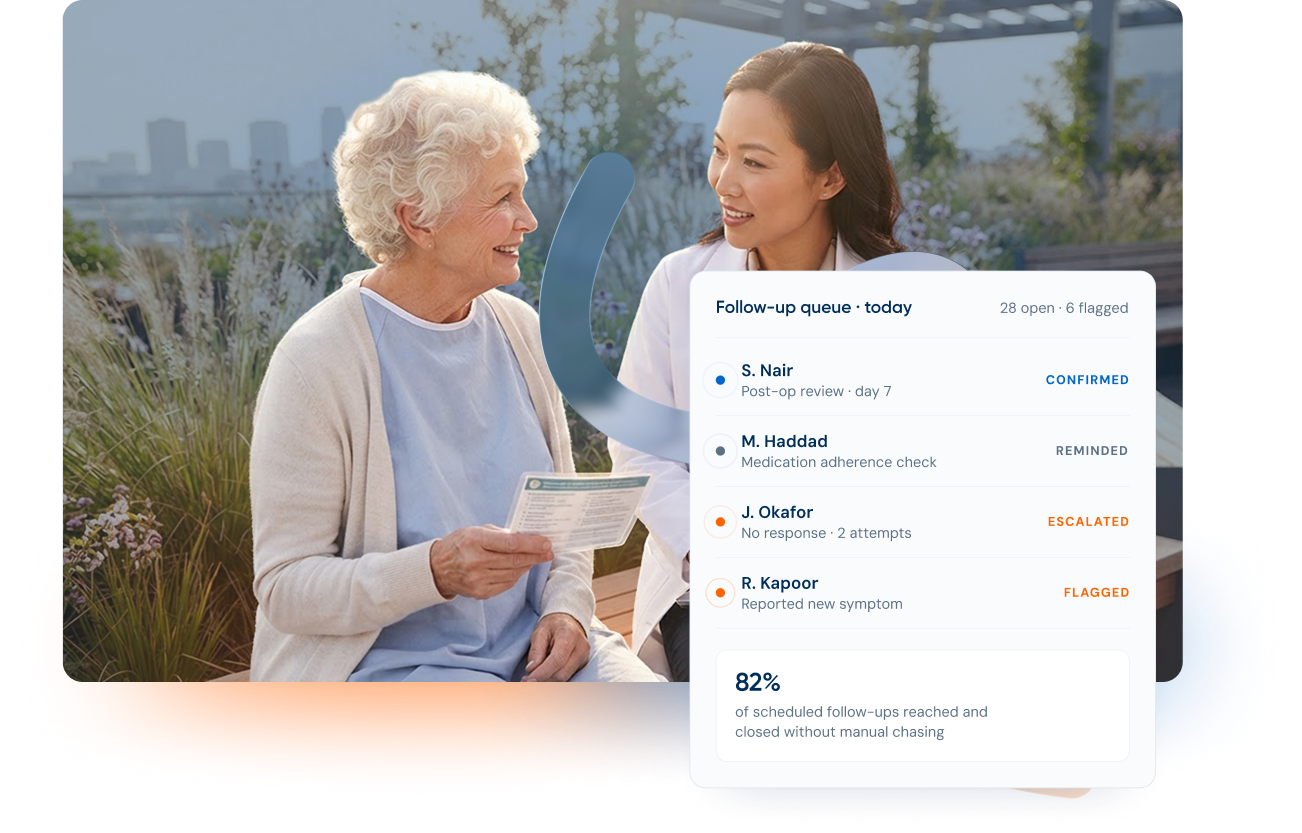
Continue Care Beyond the Visit
Extends patient engagement beyond discharge with automated follow-ups, reminders, risk alerts, and re-engagement workflows that support continuity of care and revenue recovery.
- Automates appointment reminders, post-discharge follow-ups, and patient check-ins across the care journey.
- Identifies patients at risk of missed follow-ups or care gaps so teams can intervene earlier.
- Supports patient recall, rebooking, and re-engagement workflows to reduce missed appointments and recover revenue opportunities.
Insights to Support Smarter Healthcare Decisions
Access practical perspectives, real-world examples, and solution information to help healthcare leaders evaluate technology, AI, and digital transformation priorities.

Practical Guidance for Healthcare Transformation
Access perspectives on clinical workflows, hospital operations, digital transformation, interoperability, and emerging healthcare technologies.
Access Our Guides
Real-World Results from Healthcare Organizations
See how Medinous helps healthcare providers address clinical, operational, financial, and technology challenges across different care environments.
See Customer Outcomes
Perspectives on Healthcare Technology and Transformation
Read insights on healthcare operations, digital transformation, AI, interoperability, revenue cycle management, and the technologies shaping modern care delivery.
Read Our InsightsWhat Healthcare Leaders Need to Know
Understand the Opportunities, Risks, and Considerations Before You Adopt AI






Start with a clearly defined clinical, operational, or patient-engagement requirement. This makes it easier to evaluate value, readiness, and governance before expanding adoption.
Evaluation should consider the use case, approved information sources, intended users, expected outputs, and operating environment. Clinical and operational outputs should remain subject to authorized review.
Access follows the roles, permissions, security controls, and governance policies established by your organization. Users see only the information permitted by their responsibilities.
Clinicians and authorized leaders remain responsible for interpreting information and determining the appropriate action. AI supports their work without replacing professional judgment.
Yes. AI-assisted interactions remain available for appropriate review, traceability, organizational oversight, and audit.
Measures should be linked to the use case. These may include time spent locating information, reporting turnaround, follow-up completion, outstanding actions, and user adoption.
The conversation
starts here